Protect Your Property From Water Damage
Drainage Solutions in Charleston, SC and surrounding areas for heavy rain, foundation exposure, and standing water buildup
Nexlevel Ground Pros. specializes in diagnosing water flow issues across both residential and commercial properties in Charleston and its surrounding areas. The team is dedicated to designing effective systems that redirect runoff and prevent pooling, ensuring that foundation damage does not occur. Coastal South Carolina experiences concentrated rainfall events that can easily overwhelm inadequate grading, leading to water accumulation near structures, landscaping erosion, and soil saturation. Our work focuses on understanding how water moves across your property during storms and identifying the specific locations where it tends to accumulate when natural slopes fail to efficiently carry it away.
Every drainage plan we create takes into account a variety of critical factors, including soil conditions, existing grading, and the unique layout of your property. These elements are essential in determining whether water flows toward the street or settles uncomfortably against your foundation. With clay-heavy soils commonly found throughout the Charleston region, which absorb water at a notably slow rate, it's imperative to implement systems that effectively capture and channel runoff before saturation levels become problematic. The installation of drainage solutions may involve several approaches, such as French drains, surface grading adjustments, or the addition of catch basins, depending on where water enters your property, the urgency with which it needs to be redirected, and which structures require the most protection.
To ensure the integrity and longevity of your property, we encourage you to schedule a comprehensive site evaluation. This will allow us to identify the most effective drainage approach tailored specifically to your property's topography and soil composition, ultimately safeguarding your investment from potential water-related issues.
What Proper Drainage Systems Accomplish
The process begins with mapping how water currently travels across your property during rain events, identifying low points where it stalls, and tracing paths toward vulnerable areas like foundations or landscaping beds. Soil permeability testing determines how quickly water absorbs and whether subsurface solutions work better than surface channels. Installation creates defined routes that carry water away from structures and deposit it in safe collection areas or existing drainage infrastructure.
After installation, you notice water no longer pools in specific areas after storms, soil near the foundation stays drier between rain events, and erosion stops along slopes where runoff previously cut channels through landscaping. Outdoor spaces remain usable sooner after heavy rain because water exits quickly rather than saturating the ground. Basements and crawl spaces stay drier as water stops collecting against exterior walls and seeping through foundation perimeters.
The work does not eliminate all surface water during active storms, but it prevents accumulation after rainfall stops and redirects flow away from structures. Systems require periodic inspection to confirm channels remain clear of debris and that settling has not altered slope angles. Properties with significant elevation changes may need multiple drainage solutions working together rather than a single fix.
Drainage concerns vary based on soil type, yard slope, and how water currently behaves during storms, so understanding what the work involves helps you recognize when systems will solve specific problems.
Questions Property Owners Usually Ask
How do you determine where drainage systems should go?
Site evaluation traces water movement during rain, identifies collection points, and tests soil absorption rates to design routes that move water efficiently without creating new problem areas downstream.
What changes after a French drain gets installed?
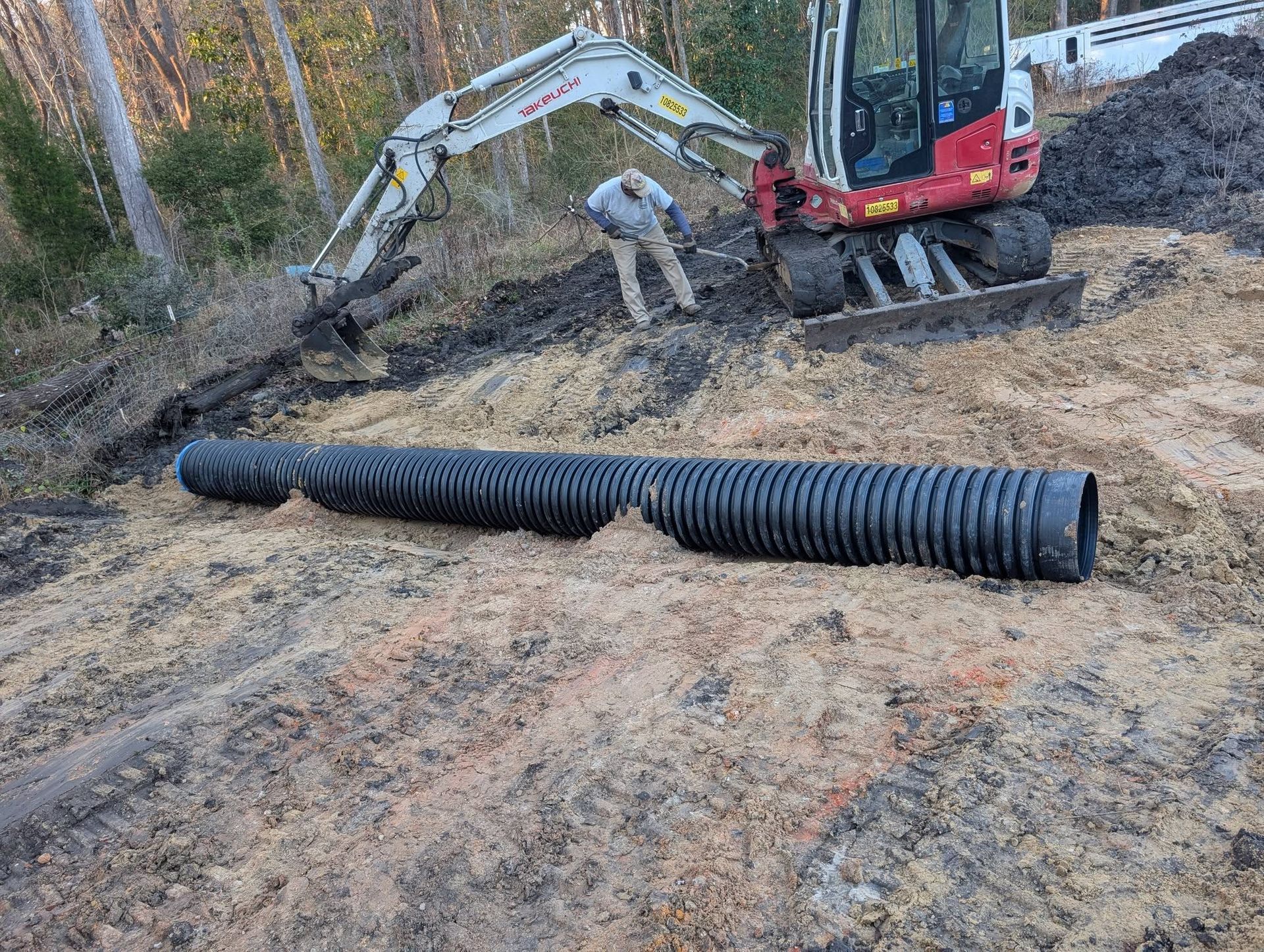
Water that previously pooled on the surface now drains into the perforated pipe surrounded by gravel, traveling underground to a discharge point where it exits safely away from structures and landscaping.
When should drainage work happen relative to other projects?
Grading and drainage installation should occur before hardscaping, sod, or planting begins, since the work alters soil elevation and creates channels that other elements must accommodate.
Why does Charleston-area drainage require different approaches than other regions?
Heavy seasonal rainfall combined with low-lying topography and clay soils means water accumulates faster than it absorbs, requiring systems that capture and redirect runoff rather than relying solely on natural percolation.
How do you prevent systems from clogging over time?
Proper installation includes filter fabric around drains, gravel that resists compaction, and outlet points designed to shed debris, though periodic inspection confirms channels remain clear and functional.
Nexlevel Ground Pros. tailors drainage plans to soil conditions, grading challenges, and the specific areas where water threatens property value or usability. Request a consultation to review your property's water flow patterns and design a system that prevents costly damage.