Precision Grading That Eliminates Guesswork
Laser Leveling in Charleston, SC for site preparation, large-area grading, and accurate elevation control
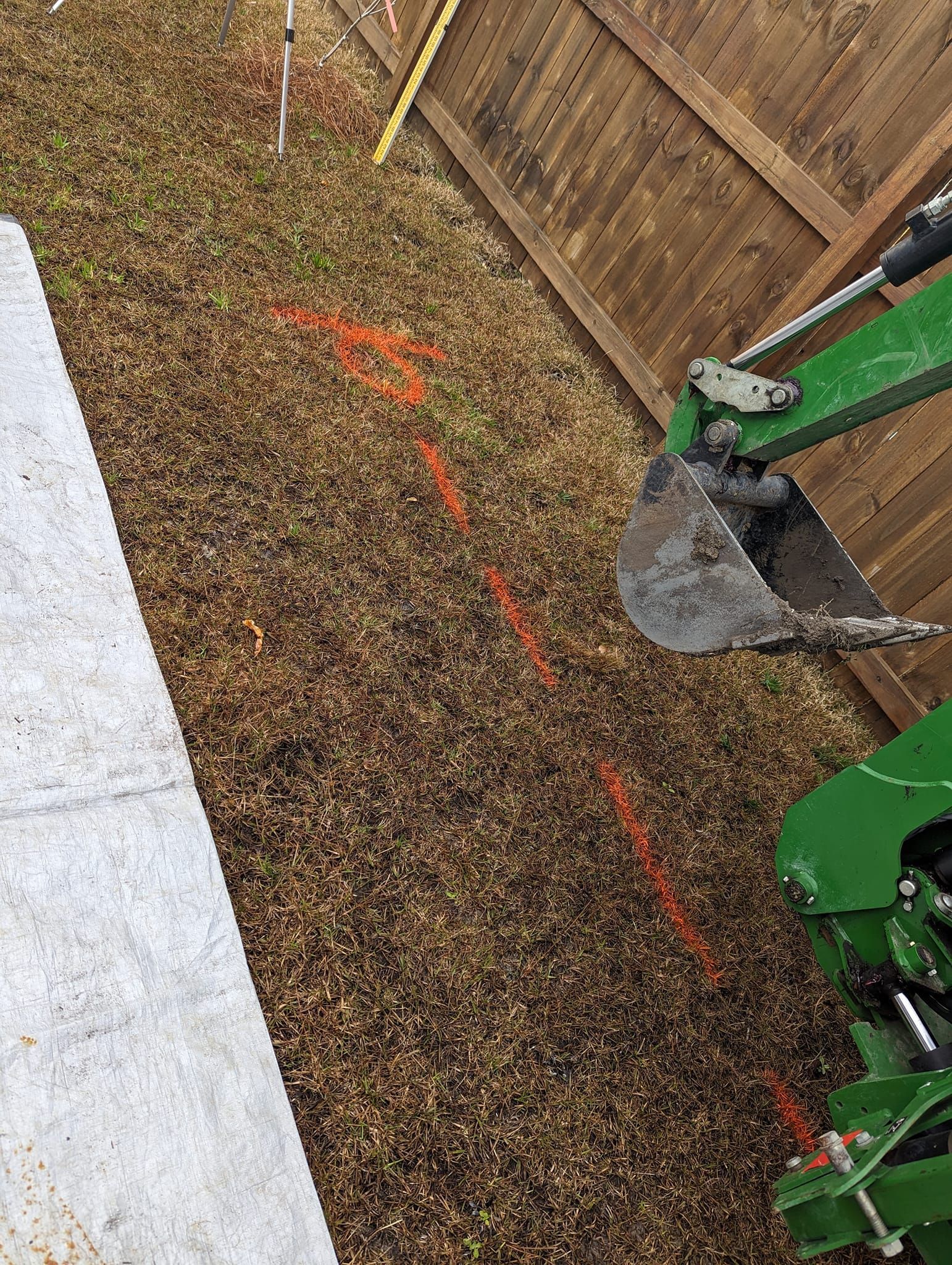
Traditional grading relies on manual slope checks and visual assessment, but laser leveling uses technology that measures elevation changes to within fractions of an inch across large areas. A rotating laser establishes a reference plane, and equipment sensors adjust blade height automatically to match programmed grades, removing human error from surface preparation. Nexlevel Ground Pros. applies this process to projects requiring precise elevation control—driveways that must drain uniformly, landscape foundations where consistent slope prevents water concentration, and site prep where accuracy reduces material waste and future corrections.
The technology proves valuable when small elevation errors compound across large areas, creating drainage problems that surface only after construction is complete. Laser systems maintain slope consistency that hand grading cannot replicate, particularly on properties where multiple grades intersect or where finished surfaces must meet exact specifications. The process works faster than traditional methods because operators adjust equipment in real time based on sensor feedback rather than stopping to measure and correct.
Upgrade to laser leveling for higher-quality outcomes on projects where drainage performance and surface accuracy directly affect long-term functionality.
How Laser Leveling Addresses Drainage Precision
The laser transmitter rotates continuously, creating an invisible reference plane at a set elevation, while receivers mounted on grading equipment detect this plane and signal when the blade height matches the programmed grade. Operators program specific slopes—such as two percent grade away from a building or a crowned surface for a driveway—and the system maintains those angles automatically as equipment moves across the site. The result is surfaces that drain uniformly without high spots that pond water or low areas that channel flow incorrectly.
After laser leveling, you notice water sheets evenly across driveways instead of following channels or pooling in depressions, graded pads for construction remain level across their entire surface, and landscaping areas show consistent slope without dips that collect runoff. Material usage drops because the process eliminates over-cutting and excessive fill, and finished surfaces require fewer corrections. The precision reduces callbacks for settling issues because compaction occurs uniformly across properly graded layers.
Laser leveling does not replace drainage systems where water must be captured and redirected underground, but it creates the surface conditions that allow those systems to function as designed. The technology works best on projects where site access accommodates laser setup and where grade complexity justifies the equipment investment. Smaller residential projects may not benefit proportionally compared to large commercial sites or extensive driveway installations.
Laser leveling offers advantages on projects where precision directly impacts performance, so understanding when the technology adds value helps you decide whether to specify it.
What Property Owners Usually Ask
What makes laser leveling more accurate than traditional grading?
The rotating laser establishes a fixed reference plane, and equipment sensors adjust blade height automatically to match programmed slopes, eliminating the cumulative errors that occur when operators manually check and correct elevation by eye.
How does the process reduce material waste?
Accurate grading prevents over-excavation and excessive fill because operators know precisely how much soil to remove or add at each point, reducing the need to order extra material or dispose of surplus.
When does laser leveling justify the additional cost?
Projects covering large areas, requiring precise drainage performance, or serving as foundations for structures benefit most, since small elevation errors compound across distance and correction after construction is expensive.
Why does this matter for driveways in Charleston, SC?
Heavy rainfall common in the Charleston region demands driveways that shed water uniformly without creating channels or pooling zones, and laser leveling produces the consistent slopes that prevent those drainage failures.
How quickly can laser-leveled surfaces be used?
Properly compacted surfaces are ready for light use immediately, though waiting for soil moisture to stabilize before applying final paving or heavy loads prevents settling that could compromise the graded elevation.
Nexlevel Ground Pros. recommends laser leveling for projects where drainage performance and surface consistency determine long-term success, applying technology that saves time and reduces errors. Reach out to discuss whether your project benefits from precision grading or whether traditional methods meet your requirements.