
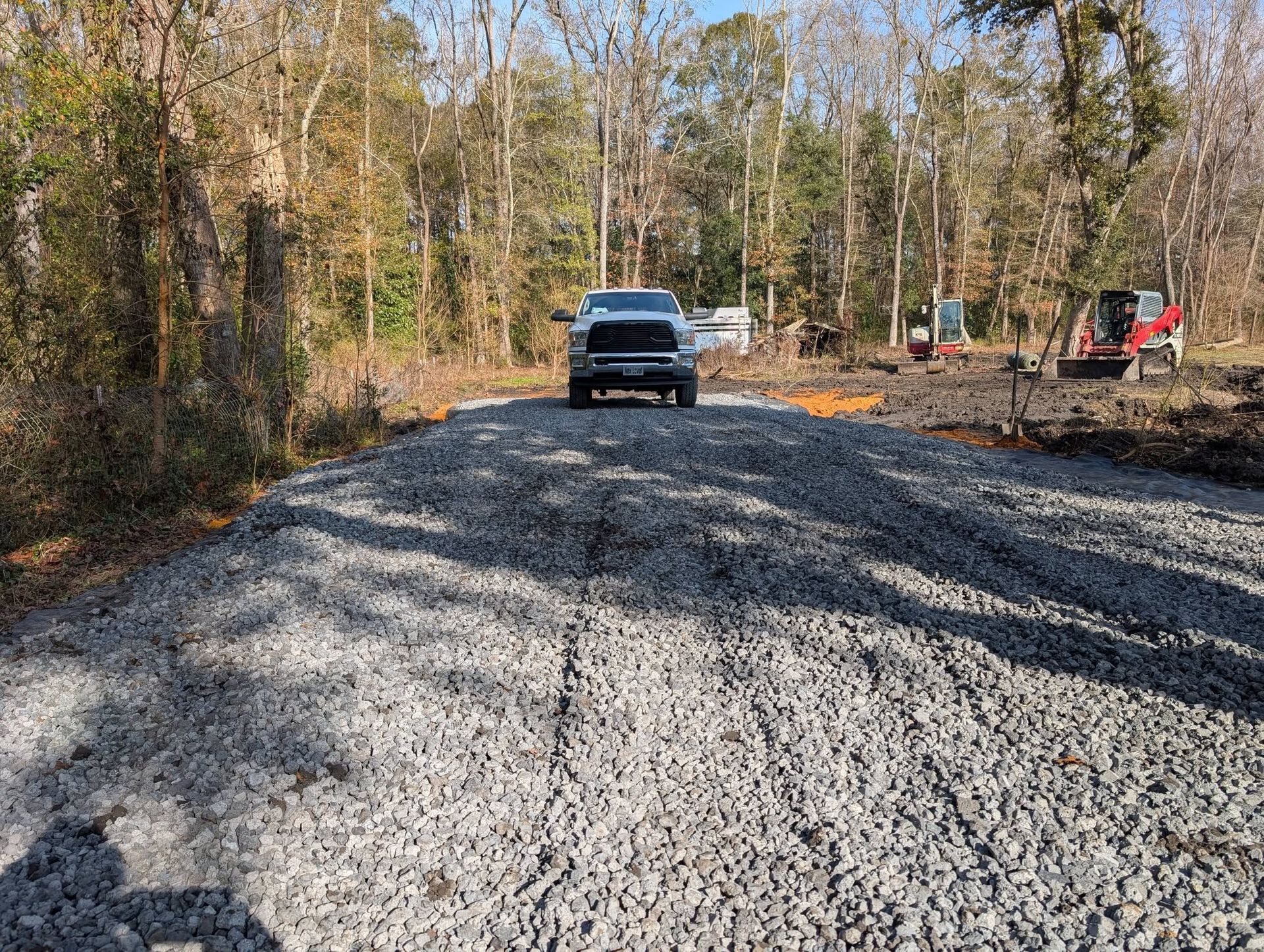
Surfaces Built to Handle Daily Traffic
Driveway Installation in Charleston, SC for new construction, failing surfaces, and property value improvement
A properly installed driveway begins below the visible surface, where base preparation determines whether the finished product cracks, shifts, or drains poorly within a few years. Nexlevel Ground Pros. prepares stable bases through grading and compaction, then installs driveways designed for long-term performance across residential and commercial properties in Charleston, SC and the surrounding areas. The work accounts for soil conditions, water runoff patterns, and how the surface will be used—daily vehicle traffic demands different construction than occasional access drives.
Base preparation involves excavating to proper depth, installing aggregate layers that distribute weight and prevent settling, and grading slopes that direct water away from structures and off the driveway surface. Skipping these steps or compacting poorly causes driveways to crack as soil shifts beneath them, develop depressions where water pools, and fail prematurely under vehicle loads. Material options suit different budgets and property styles, but all require the same attention to base stability and drainage management to perform as expected.
Request a quote for new or replacement driveways based on your property's access requirements and soil conditions.
What Proper Driveway Installation Requires
Installation starts with excavation to remove unstable topsoil and organic material that compresses unevenly, followed by aggregate base placement in compacted layers that create load-bearing capacity. Grading establishes slopes—typically two percent—that move water toward edges and away from garage entries or building foundations. Edges get defined with forms or borders that prevent material migration and maintain surface boundaries under traffic.
After installation, the surface resists cracking because weight distributes through a properly compacted base rather than concentrating on weak subsoil, water runs off during rain instead of pooling in depressions, and the driveway maintains its grade without settling into low spots. Vehicles no longer track mud into garages during wet weather because the surface stays firm and drains quickly. Curb appeal improves immediately with clean lines and uniform appearance, and property value reflects the functional upgrade.
The work includes grading and water runoff management, but does not address drainage issues originating uphill from the driveway unless those systems are planned separately. Driveways installed without proper base preparation may look acceptable initially but develop problems as seasonal moisture changes cause soil expansion and contraction. Material choice affects surface longevity—some options tolerate freeze-thaw cycles better, while others perform well under high heat but crack in cold climates.
Driveway projects involve decisions about materials, grading, and how the surface integrates with existing drainage, so clarity on these points helps set realistic expectations.
Questions Before Starting Your Project
What causes new driveways to crack within a few years?
Inadequate base preparation, poor compaction, or insufficient depth allows soil movement beneath the surface, creating stress points that appear as cracks when vehicles load the weakened areas repeatedly.
How does base preparation differ from just grading the driveway area?
Grading establishes slope, but base preparation involves excavating unstable soil, installing aggregate layers, and compacting each layer to create load-bearing capacity that prevents settling and surface failure.
What should homeowners look for when evaluating driveway quality?
Proper installations show consistent drainage slope, firm edges that resist spreading, and base depth appropriate for soil type and expected vehicle weight—shortcuts in any area lead to premature failure.
When does driveway installation require additional drainage work?
Properties where uphill runoff crosses the driveway path or where existing grading directs water toward the driveway need separate drainage systems to capture and redirect flow before it undermines the base.
Why do costs vary significantly between driveway projects?
Base depth, soil stability, access difficulty, and material choice all affect labor and material requirements—sites with poor soil need deeper excavation and more aggregate, while straightforward installations over stable ground cost less.
Nexlevel Ground Pros. installs driveways with attention to base stability and drainage management, creating surfaces that perform reliably under daily use and resist common failure patterns. Call (843) 800-0296 to discuss your project requirements and receive a detailed estimate based on site conditions.