Ground Preparation Built for Accuracy
Excavation in Charleston, SC for properties requiring foundation preparation, drainage installation, or utility line access
Nexlevel Ground Pros. handles excavation work in Charleston, SC and throughout the surrounding region for residential and commercial projects that need precise digging, grading, or site clearing. You need this service when preparing land for new construction, installing underground utilities, or correcting drainage problems that require below-grade solutions. Lowcountry soil conditions—ranging from sandy loam to heavy clay pockets—affect how excavation is approached, what equipment works best, and how quickly water infiltration occurs during the digging process.
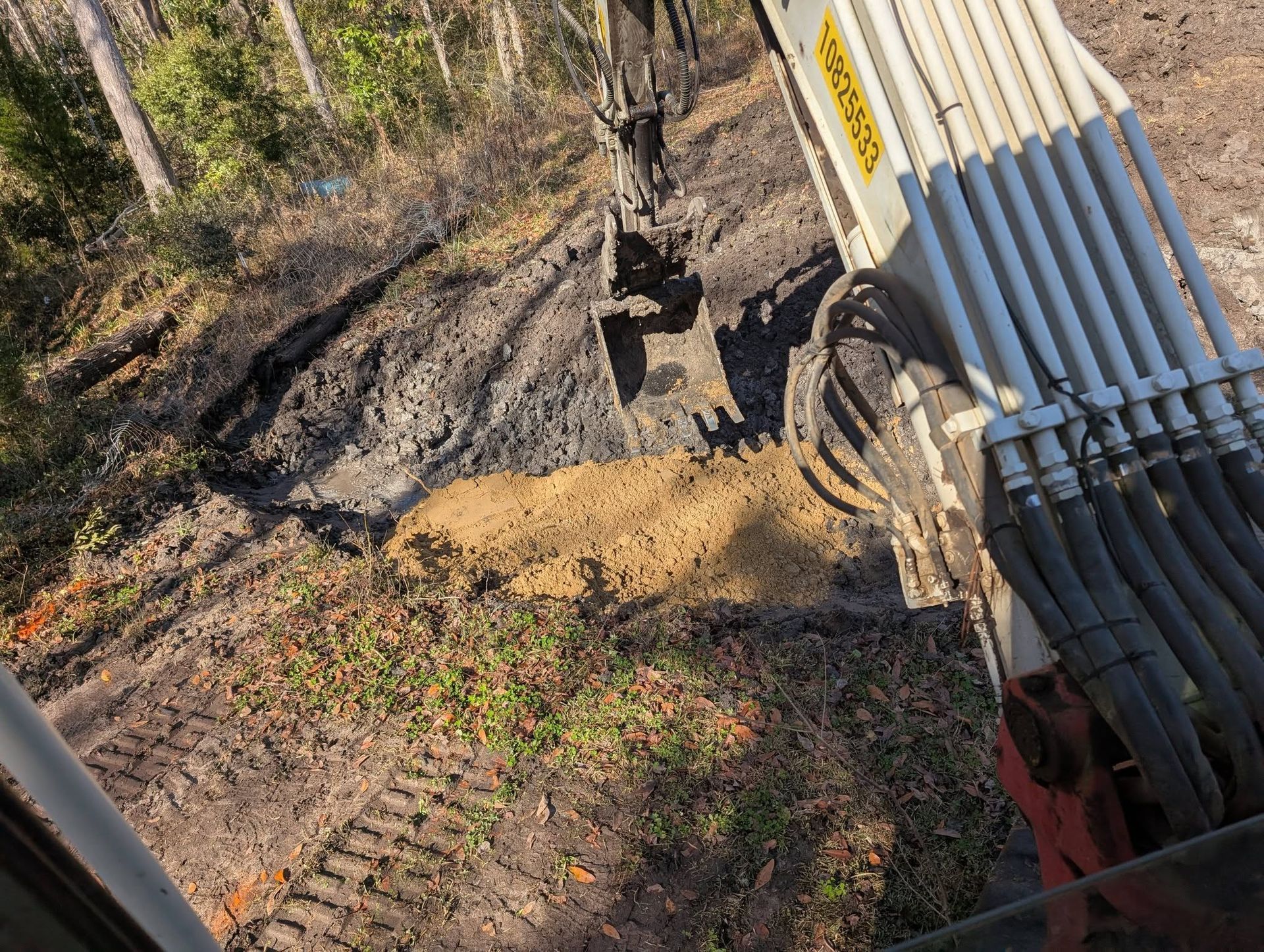
The service involves more than removing dirt: operators evaluate soil composition, locate existing utilities, establish grade requirements, and determine the correct depth and dimensions for the project. Different soil types dictate whether excavation proceeds quickly through sand or requires more deliberate work through clay layers that compact equipment tires and slow progress. Proper excavation also accounts for water table depth, which in the Lowcountry can sit just a few feet below grade and require dewatering strategies or timing adjustments.
Request a site evaluation to review soil conditions, access constraints, and project-specific excavation requirements before scheduling the work.
What Proper Excavation Requires
Accurate excavation depends on knowing what lies beneath the surface and what the finished grade needs to accomplish. Operators mark utility lines, check for underground obstructions, and verify that excavation depth matches engineering specifications or drainage plans. Equipment selection changes based on site access, soil type, and whether the project requires a small trench or a full foundation footprint.
After excavation is complete, you'll see a level, compacted surface ready for the next phase—whether that's pouring a foundation, laying utility lines, or installing a drainage system. The surrounding area remains stable, with soil properly sloped to prevent collapse or erosion. Any excess material is either redistributed on-site for grading purposes or removed entirely, leaving a clean work area.
This service often pairs with site preparation or grading work, particularly when projects require both excavation and surface leveling to meet final grade specifications. Some jobs need only selective digging for utility trenches, while others involve clearing and excavating entire building pads.
Excavation timelines and methods vary depending on site-specific factors that aren't always visible until work begins.
What Property Owners Usually Ask
What affects how long excavation takes?
Soil composition, water table depth, site access, and the size of the area being excavated all influence project duration. Sandy soils excavate faster than clay, but clay holds a slope better without additional shoring.
How do you handle high water tables common in Charleston, SC?
Excavation in areas with shallow water tables may require scheduling during drier months, using pumps to manage groundwater, or adjusting dig depths to work above the saturation line when possible.
What happens to the excavated material?
Depending on your project, excess soil can be redistributed on-site to build up low areas, used for grading around the foundation, or hauled away if it's not needed.
Why does soil type matter for excavation?
Clay soils compact under equipment weight and require more power to dig, while sandy soils move easily but may need stabilization to prevent trench collapse during utility installation.
What preparation is needed before excavation starts?
Utility lines must be located and marked, site access confirmed for equipment, and grade elevations established so operators know exactly how deep to dig.
Nexlevel Ground Pros. works with contractors, builders, and property owners to coordinate excavation timing with project schedules and site conditions. Schedule a consultation to review your property's soil characteristics and excavation scope.