Stable Surfaces Built From Proper Slopes
Level and Grading in Charleston, SC for uneven yards, pre-construction preparation, and drainage correction
Uneven terrain creates water pooling, limits usability, and complicates construction projects when slopes direct runoff toward structures instead of away. Correcting grade involves reshaping soil to create surfaces that drain predictably, support planned improvements, and prevent long-term settling. Nexlevel Ground Pros. uses professional equipment to establish smooth, stable surfaces across residential yards and commercial properties in Charleston and the surrounding areas, addressing elevation inconsistencies before they cause structural issues or limit how spaces function.
The process removes high spots, fills depressions, and sets slopes that move water toward safe discharge points rather than allowing it to collect near foundations or in areas meant for foot traffic. Proper grading is essential before driveway installation, landscaping, or building construction because errors in elevation create problems that worsen over time as water exploits low points and soil settles unevenly. Equipment selection depends on site size, soil type, and precision requirements—larger projects require different machinery than small yard corrections.
Schedule an evaluation to assess grading needs and determine what slope adjustments will resolve drainage or usability concerns.
Why Correct Grading Prevents Long-Term Problems
Grading work establishes specific slope percentages that balance drainage performance with usability—too flat and water stalls, too steep and erosion accelerates. Soil gets redistributed to create consistent elevation changes, compacted in layers to prevent future settling, and tested to confirm slopes direct water as intended. The process accounts for existing structures, utilities, and landscaping elements that constrain where soil can be added or removed.
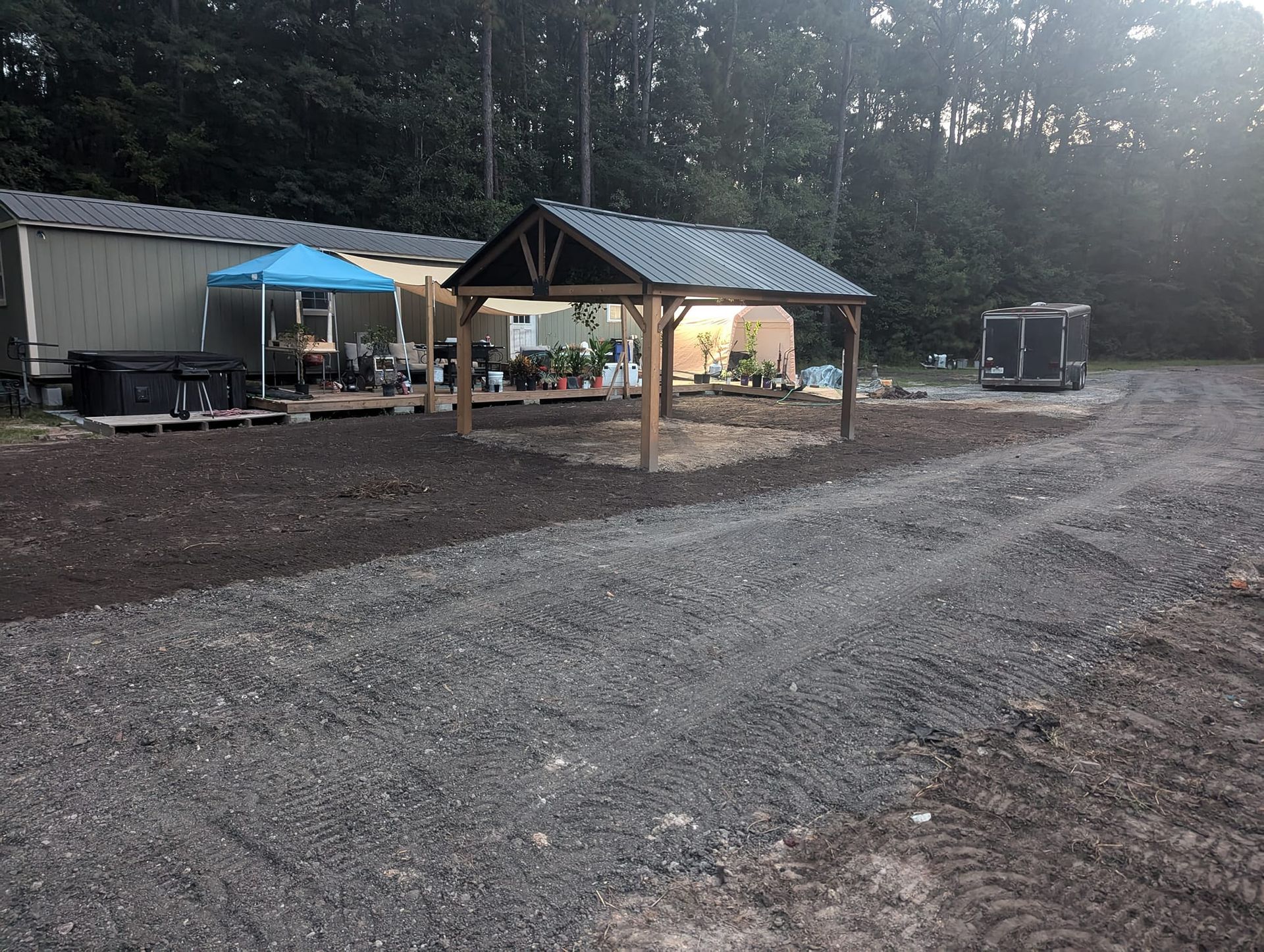
Once grading is complete, water flows visibly away from structures during rain rather than pooling in depressions, the ground feels level underfoot in areas designated for patios or walkways, and soil remains stable without forming ruts or washouts. Projects built on properly graded surfaces avoid cracking caused by uneven settling, and landscaping installed afterward thrives because water distributes evenly rather than concentrating in low zones. The work eliminates the need to repeatedly fill sunken areas or channel water manually after storms.
Grading does not replace drainage systems where subsurface water movement requires capture and redirection, but it creates the foundation that allows those systems to function efficiently. Properties with significant elevation challenges may need both grading and dedicated drainage infrastructure. Soil type affects how well graded surfaces hold their shape—clay compacts well but drains slowly, while sandy soil drains quickly but erodes more easily under slope.
Grading concerns vary based on current terrain, planned improvements, and how water behaves across your property during rain events.
Common Questions About This Service
What determines the correct slope for grading work?
Slope depends on proximity to structures—areas near foundations need steeper grades to move water quickly away, while open yards use gentler slopes that prevent erosion while still directing runoff toward discharge points.
How does grading differ from just filling low spots?
Grading reshapes entire areas to create consistent drainage paths and stable surfaces, while filling individual depressions often creates new low points nearby as soil settles unevenly without proper compaction and slope design.
When should grading happen in a project timeline?
Grading must occur before hardscaping, planting, or construction begins, since the work alters site elevations and creates the drainage framework that other improvements rely on.
Why does soil type affect grading approaches in Charleston, SC?
Clay soils common in the region require careful compaction and drainage planning because they absorb water slowly, making slope design critical to preventing surface pooling during South Carolina's heavy rainfall periods.
How long before graded areas stabilize for use?
Compacted surfaces stabilize within days for light use, but waiting two weeks before heavy equipment or construction activity allows soil moisture to equilibrate and reveals any settling that needs correction.
Nexlevel Ground Pros. corrects uneven terrain with precision and efficiency to minimize project delays, creating surfaces that drain properly and support long-term improvements. Contact us to review your property's elevation challenges and plan grading work that prevents future problems.