Foundations Start with Level Ground
Site preparation in Charleston, SC and surrounding areas for properties requiring grading, clearing, and stabilization before construction or landscaping begins
Unstable or improperly graded ground causes foundation settling, drainage failures, and construction delays that could have been prevented with thorough site preparation. This service combines clearing vegetation, removing obstacles, grading the surface to specifications, and compacting soil to create a stable base for whatever comes next. You need site preparation when converting raw land into a buildable lot, correcting grade issues that cause water pooling, or preparing an area for hardscaping, driveways, or landscaping installations. Nexlevel Ground Pros. handles site prep work for builders, homeowners, and commercial developers in Charleston, SC who need land ready for the next phase without delays or surprises.
The process starts with clearing brush, trees, and debris, then moves to rough grading that establishes the general slope and drainage pattern. Fine grading follows, creating precise elevations that match engineering plans or ensure water flows away from structures. Soil compaction tests verify that the ground can support the intended load without settling over time—critical for foundations, pavement, and retaining walls.
Book a site consultation to review grade requirements, drainage considerations, and preparation timelines before your project begins.
What Changes After Site Prep Completes
Thorough site preparation eliminates the variables that cause construction problems later: soft spots that settle unevenly, grade slopes that direct water toward foundations instead of away, and buried debris that interferes with excavation or utility installation. Equipment operators use laser levels and GPS grading systems to match engineered elevations, and compaction equipment densifies soil layers to meet bearing capacity requirements. The Lowcountry's mix of sandy and clay soils requires different compaction techniques—sand compacts with vibration, while clay needs static weight and moisture control.
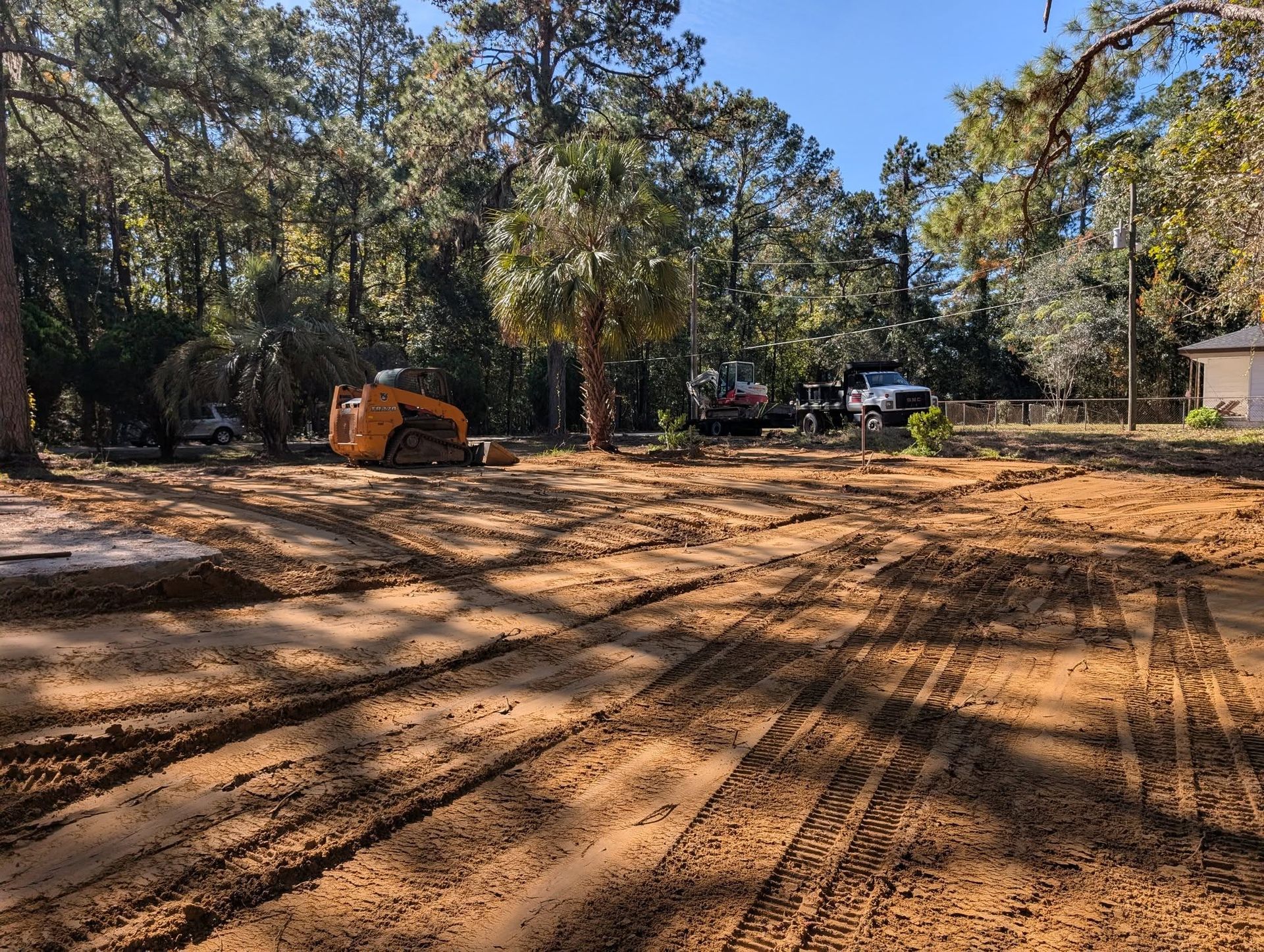
Once prep work finishes, you'll see a smooth, stable surface with consistent elevation across the site and drainage patterns that move water to designated areas. Stakes or markers indicate final grade elevations, and any fill material has been compacted in lifts to prevent future settling. The site is accessible for construction equipment, free of vegetation or obstacles, and ready for foundations, utilities, or paving.
Site preparation often includes installing temporary erosion controls, particularly on sloped properties where rain can wash away exposed soil before construction stabilizes the surface. Some projects also require soil testing to verify compaction levels or identify unsuitable material that needs replacement before building begins.
Site preparation decisions affect everything that follows, so understanding the process and requirements helps avoid costly changes mid-project.
Questions Before Starting Your Project
What's involved in grading for proper drainage?
Grading establishes slopes that direct water away from structures and toward drainage systems, retention areas, or natural runoff paths. In Charleston, SC, managing the seasonal water table and heavy rain events requires grade slopes calculated for local conditions.
How do you ensure soil stability for construction?
Compaction equipment densifies soil in controlled layers, and testing verifies that the ground meets the bearing capacity needed for foundations or pavement. Unsuitable soil gets removed and replaced with engineered fill.
What happens if the site has drainage problems?
Existing grade issues are corrected during preparation, and subsurface drainage systems can be installed if needed to manage groundwater or direct runoff away from building areas.
Why does timing matter for site preparation?
Completing prep work during dry weather prevents equipment from compacting wet soil, which creates structural problems. Scheduling site prep before construction starts keeps projects on timeline.
What's the difference between rough and fine grading?
Rough grading establishes general elevation and slope, while fine grading creates precise surfaces that match engineering plans and prepare the site for construction or paving.
Nexlevel Ground Pros. coordinates site preparation with project schedules to keep construction timelines on track and prevent delays caused by unstable or improperly graded ground. Reach out to plan your site prep work and confirm grade specifications.